
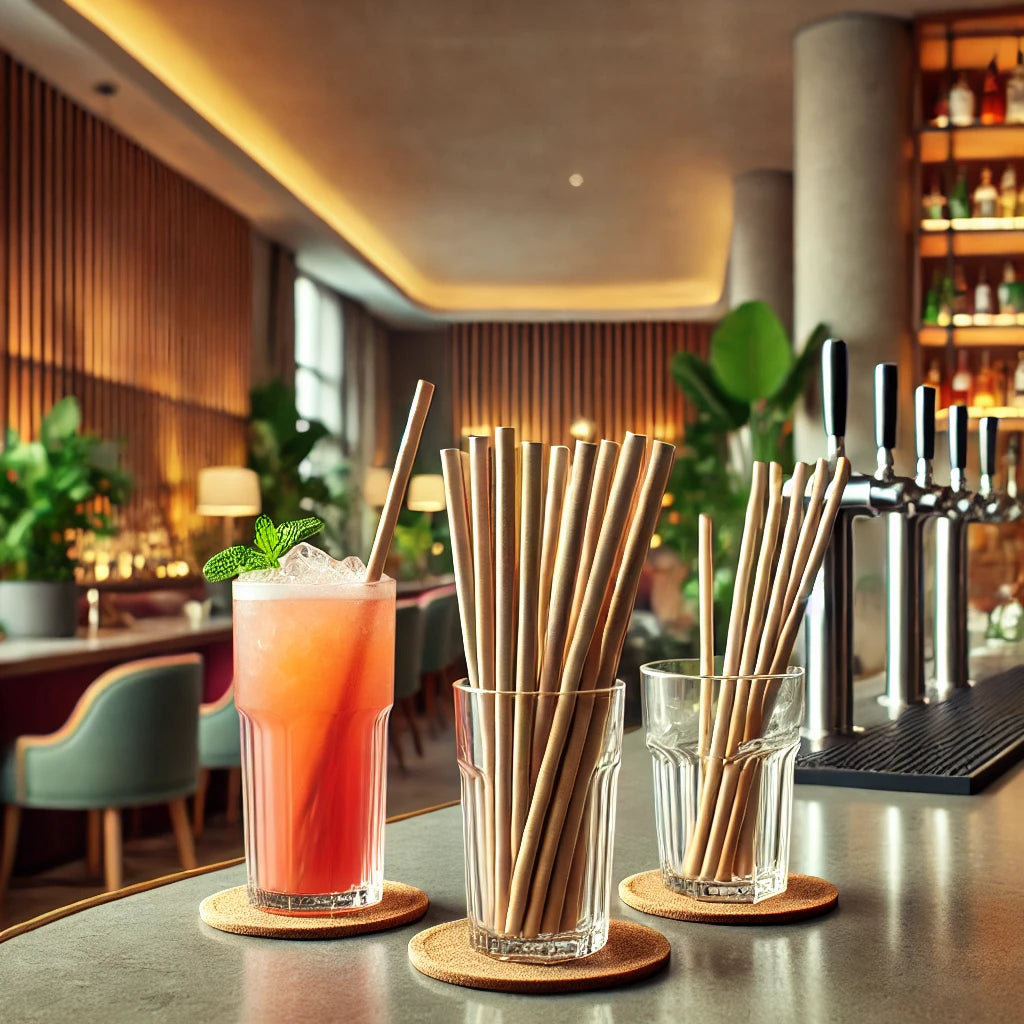
Trends in the hospitality industry: the rise of sugar beet fiber straws
Sustainable trends in the hospitality industry: the rise of beet fiber straws
In a context where environmental issues have become paramount, the hospitality industry is rapidly evolving towards more planet-friendly practices. Among the solutions emerging to replace single-use plastic, sugar beet straws are attracting growing interest. This ecological alternative is not only sustainable but also part of a circular approach by promoting agricultural by-products. This shift towards eco-responsible solutions like sugar beet straws reflects the profound transformation the hospitality industry is undergoing, responding to growing consumer demand for greener options. In this article, we will explore in depth the rise of this trend and its implications for the hotel industry.
The importance of sustainable solutions in the hospitality industry
Consumer pressure for eco-friendly practices
Today, consumers are increasingly aware of the environmental impact of their choices and expect companies to take concrete steps to limit their carbon footprint. This trend is particularly visible in the hotel sector, where guests value eco-friendly practices as a selection criterion. According to a recent study, more than two-thirds of travelers would be willing to pay more to stay in an environmentally friendly hotel. As a result, hotels must adapt to these new expectations by integrating eco-friendly practices into their daily operations, whether it's reducing water consumption, using local products, or banning single-use plastics like straws.
The environmental impact of single-use plastic in the hotel industry
Single-use plastic poses a major environmental challenge. Every year, more than eight million tons of plastic end up in the oceans, endangering marine life and disrupting ecosystems. The hospitality industry, while not the main source of this waste, contributes significantly, particularly through the widespread use of plastic straws. With the rise of tourism, hotels are finding themselves obliged to provide sustainable alternatives to reduce their environmental impact. Legislation is also tightening, with gradual bans on single-use plastic in many countries, pushing companies to seek viable alternatives, such as beet fiber straws, that meet these new ecological requirements.
What are beet fiber straws?
Definition and explanation
Beet fiber straws are an eco-friendly innovation made from the residue of sugar beet production. Instead of being discarded or used as agricultural waste, these by-products are transformed into a sustainable material that can replace traditional plastic. This approach is part of a circular economy where nothing is lost, everything is transformed. Unlike plastic straws, which take hundreds of years to degrade, beet fiber straws are biodegradable and compostable. They leave no toxic residue in the environment and decompose naturally within a few months, making them particularly attractive to companies keen to reduce their environmental footprint.
The benefits of beet fiber straws
The benefits of beet fiber straws are numerous. First, they are completely biodegradable, meaning they leave no plastic residue in the environment once discarded. This feature is crucial in an era where plastic pollution has become a global problem. Second, these straws are strong and durable. Unlike paper straws, which quickly degrade when immersed in liquids, beet fiber straws retain their shape and strength throughout their use. Furthermore, they do not alter the taste of drinks, an aspect often criticized with paper straws. Finally, their manufacturing process allows for the recovery of agricultural residues, reinforcing their eco-responsible nature.
Beet fiber straws: a viable alternative for the hospitality industry
Why are hotels adopting this trend?
More and more hotels are adopting beet fiber straws for several reasons. First, they help meet guest expectations for sustainability. Consumers are more likely to choose establishments that clearly display their commitment to the environment. Second, these straws represent a relatively low cost compared to other alternatives such as metal or bamboo straws, which can be more expensive and require regular maintenance. Beet fiber straws offer a practical, effective, and economical solution, while also allowing hotels to improve their brand image. This strategic choice is becoming a selling point in an industry where competition is fierce and differentiation through sustainable practices can make all the difference.
Comparison with other sustainable solutions (bamboo, metal, paper)
There are several alternatives to plastic straws, each with its own pros and cons. Metal straws, for example, are reusable and durable, but they require regular maintenance and may be considered unsuitable for some uses due to their rigidity. Bamboo straws are also biodegradable and natural, but they can leave a taste in the drink, which is a disadvantage for some consumers. Finally, paper straws, while environmentally friendly, tend to soften after a short time in liquids. Comparatively, beet fiber straws combine the best of both worlds: they are both biodegradable and durable enough for extended use, without the drawbacks of off-flavors or rapid deterioration.
Case studies: Hotels that have adopted beet fiber straws
Several pioneering hotels have already incorporated beet fiber straws into their daily practices. These include renowned establishments such as the Accor group, which has replaced all plastic straws with sustainable alternatives in its properties. These initiatives are not limited to straws alone. They are part of a comprehensive approach aimed at reducing the use of single-use plastics, improving the energy efficiency of hotels, and minimizing waste. The impact of these initiatives is significant, with notable reductions in plastic waste and improved guest satisfaction, who are increasingly sensitive to hotels' environmental efforts.
The Future of Beet Fiber Straws in the Hospitality Industry
Upcoming trends
The rise of beet fiber straws in the hospitality industry is just the beginning of a broader shift toward sustainable practices. As technology improves and production becomes more accessible, their adoption is expected to become more widespread. Indeed, many major hotel chains have already announced plans to expand the use of sustainable materials in their establishments, and beet fiber straws are an integral part of this. Additionally, with evolving regulations on the use of single-use plastics in many countries, hotels are being forced to find viable and eco-friendly alternatives. As a sustainable innovation, beet fiber straws therefore have a promising future in this rapidly evolving sector.
To better understand the regulations in force concerning the use of ecological straws, do not hesitate to consult our article on certifications and regulations related to ecological straws .
Conclusion
In conclusion, beet fiber straws represent an ecological and sustainable solution for the hospitality industry. They respond to both the growing consumer demand for environmentally friendly products and new regulations aimed at reducing the use of single-use plastics. Thanks to their numerous advantages, these straws are positioned as a viable and practical alternative for hotels wishing to adopt eco-responsible practices. To learn more about our eco-friendly solutions, please explore our collection of eco-responsible straws .